RA 05h 34m 32s  ·  Dec +22° 00′ 52″  ·  Crab Nebula

Observing the universe,
decoding its data.

// Astrophysicist → Data Scientist

PhD researcher specialising in observational astronomy — optical and multi-wavelength surveys, and spectral analysis. Six years reducing, modelling, and interpreting complex datasets from world-class observatories. Now bringing that rigour to data-driven industry roles.

Data Scientist | Statistical Modeling | Large-Scale Observational Data

Python / NumPy / Astropy Spectroscopy DESI · MaNGA · MUSE Statistical Analysis Data Pipelines Data Visualization
Galaxy Sample From Academia to Industry

Research highlights

Selected projects

Stellar Populations · Massive ETGs

Mass Profile Compactness as Ex-situ Tracer in Massive ETGs

Studied 726 Massive ETGs with IFU spectroscopy from MaNGA and light profiles from DESI. Applied PCA sample splitting, spectra stacking and conducted full spectrum fitting with ALF. Revealed how external and internal mechanisms affect the average stellar population.

NASA ADS
MaNGADESI LegacySurveyLick InexALF
→ More Extended ETGs have higher [Mg/Fe] in the outskirts as a result of higher ex-situ fraction
Scaling Relation· Intrinsic Scatter

Intrinsic Scatter in Scaling Relations of Massive ETGs

Applied covariance matrix to estimate accurate measurement uncertainties in spectra. Conducted full spectrum fitting to 726 massive ETGs in three radial bins and performed Bayesian analysis to infer scaling relations (slope, intercept, intrinsic scatter) between σ and elemental abundances.

MaNGAALFBayesian Inference
→ Intrinsic Scatter of Scaling relation σ vs. [Mg/Fe] increases with radius
Spectroscopy · Satellite Galaxies

Current Satellites of Massive ETGs

Applied Caustic Method to select true satellites of 726 massive ETGs from SDSS single-fiber spectroscopy data. Stacked spectra and measured LICK indices.

SDSSCaustic MethodLICK index
→ No apparent trend in current satellites that mirrors the outskirts of the host galaxies.
Research highlights

Key results

Research highlights

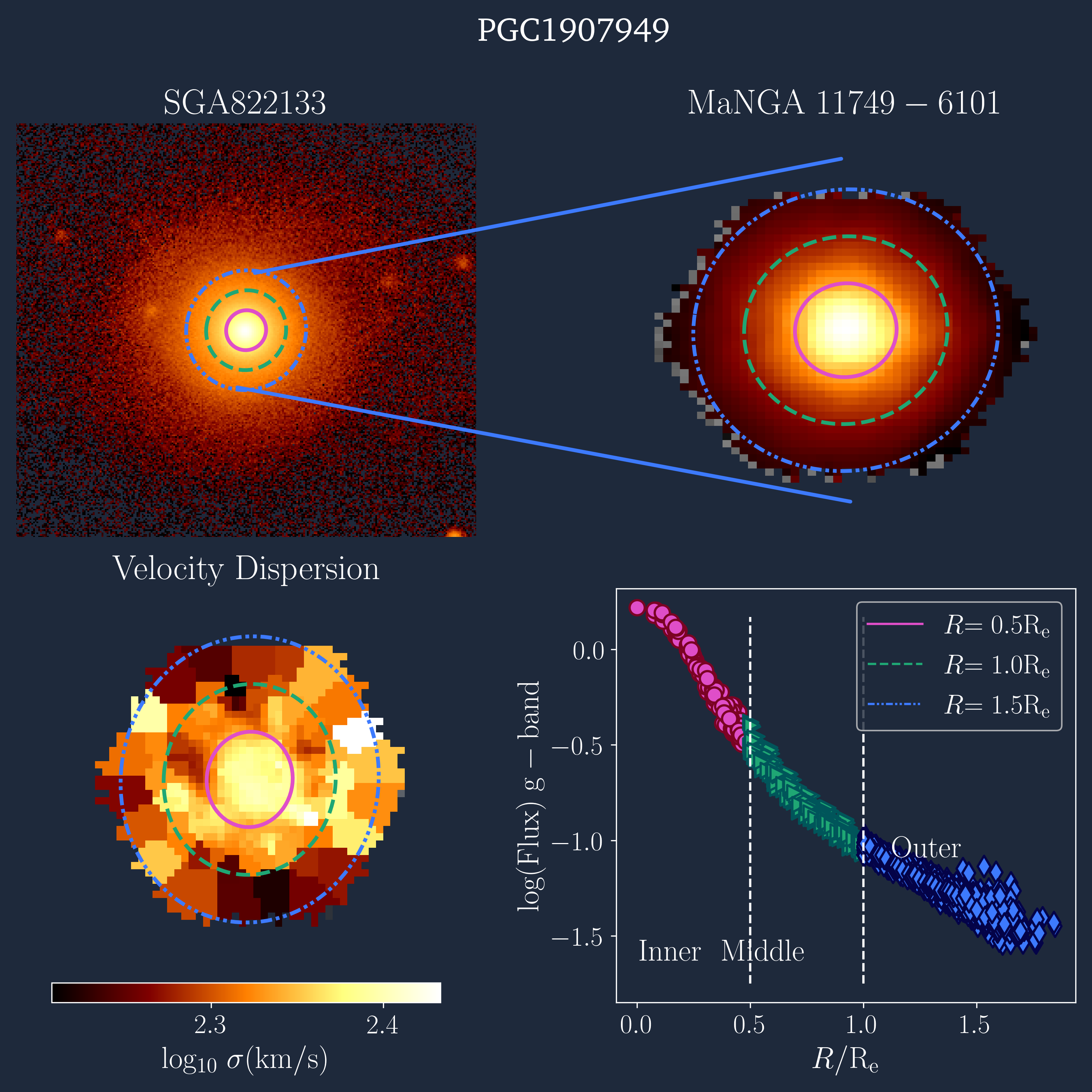
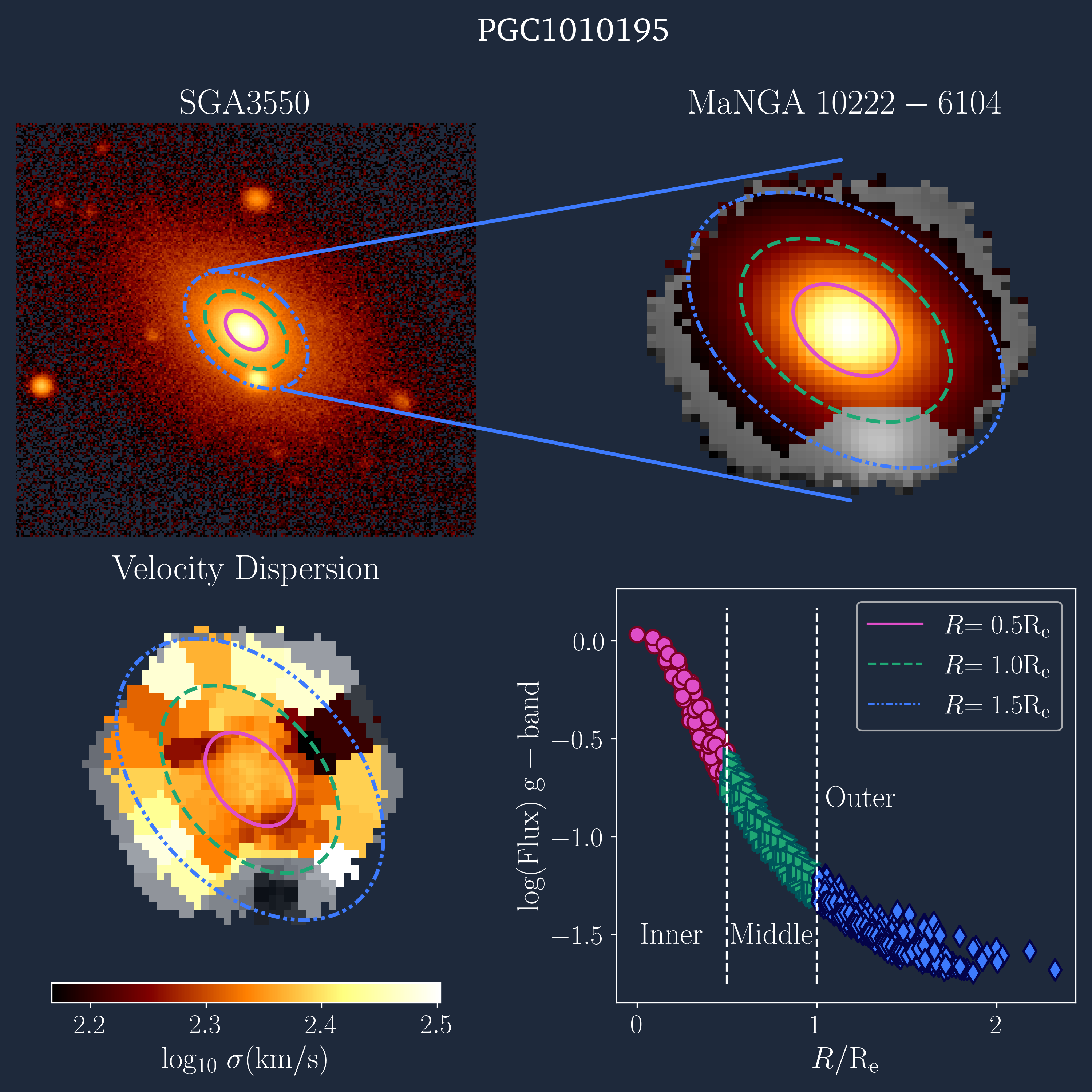
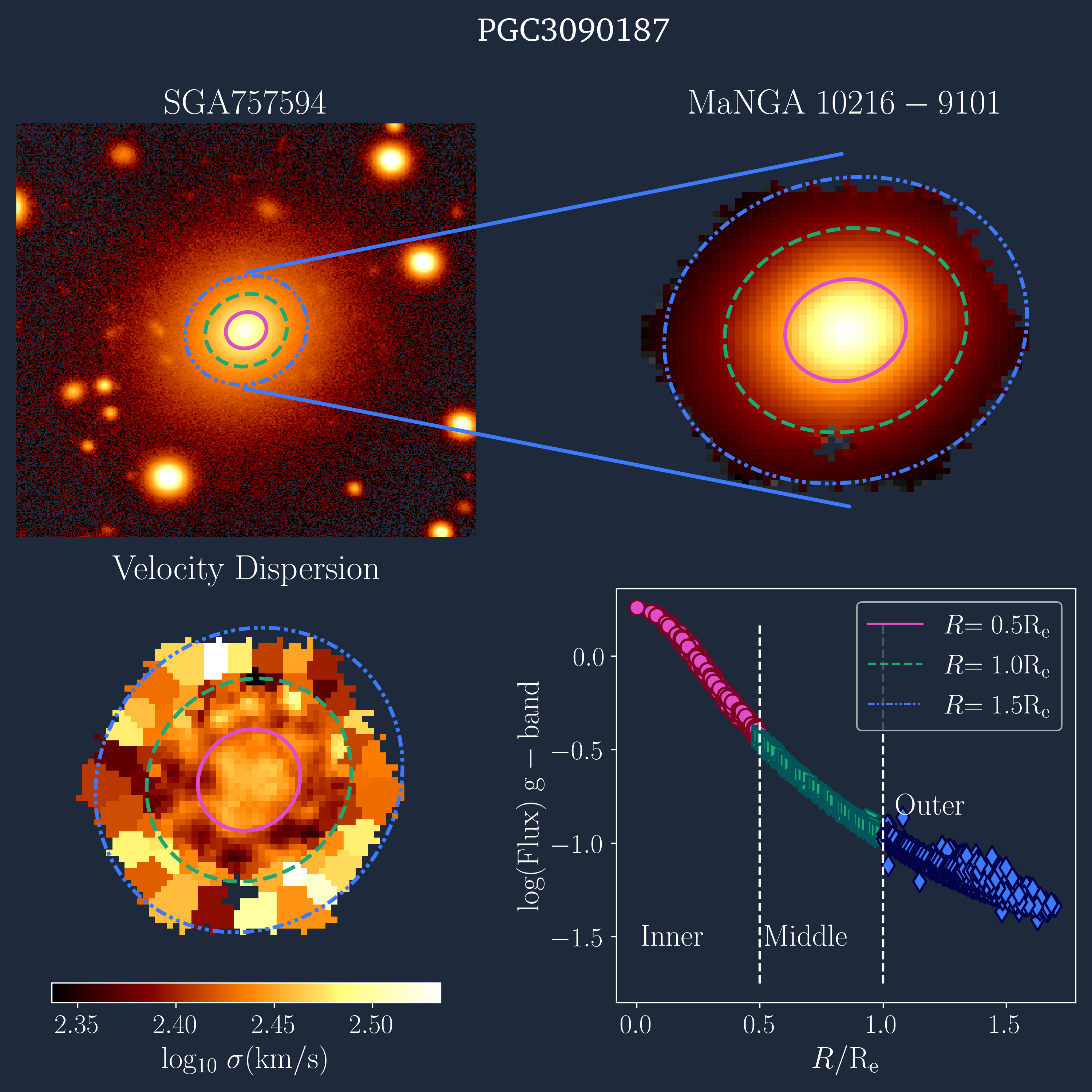
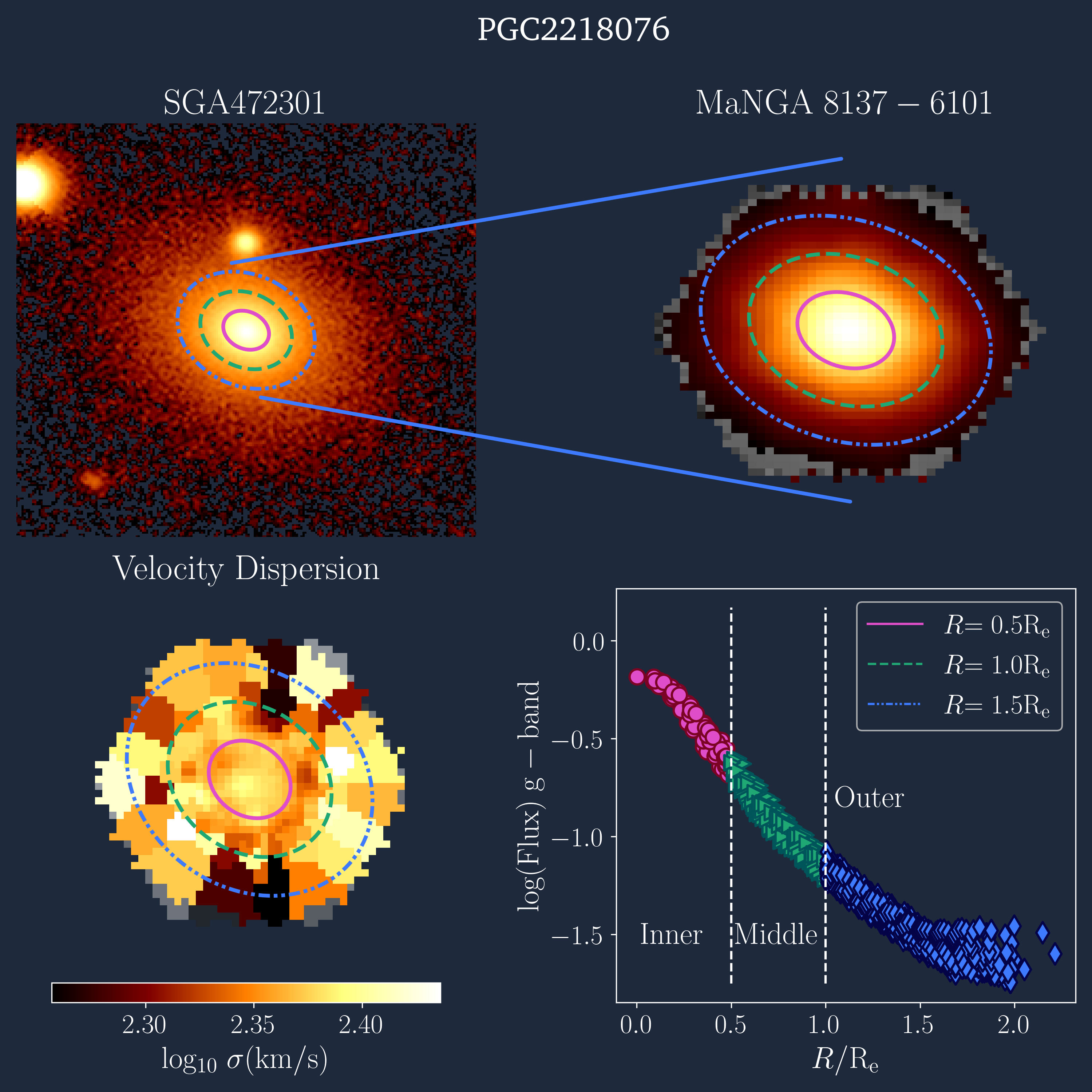
QA examples

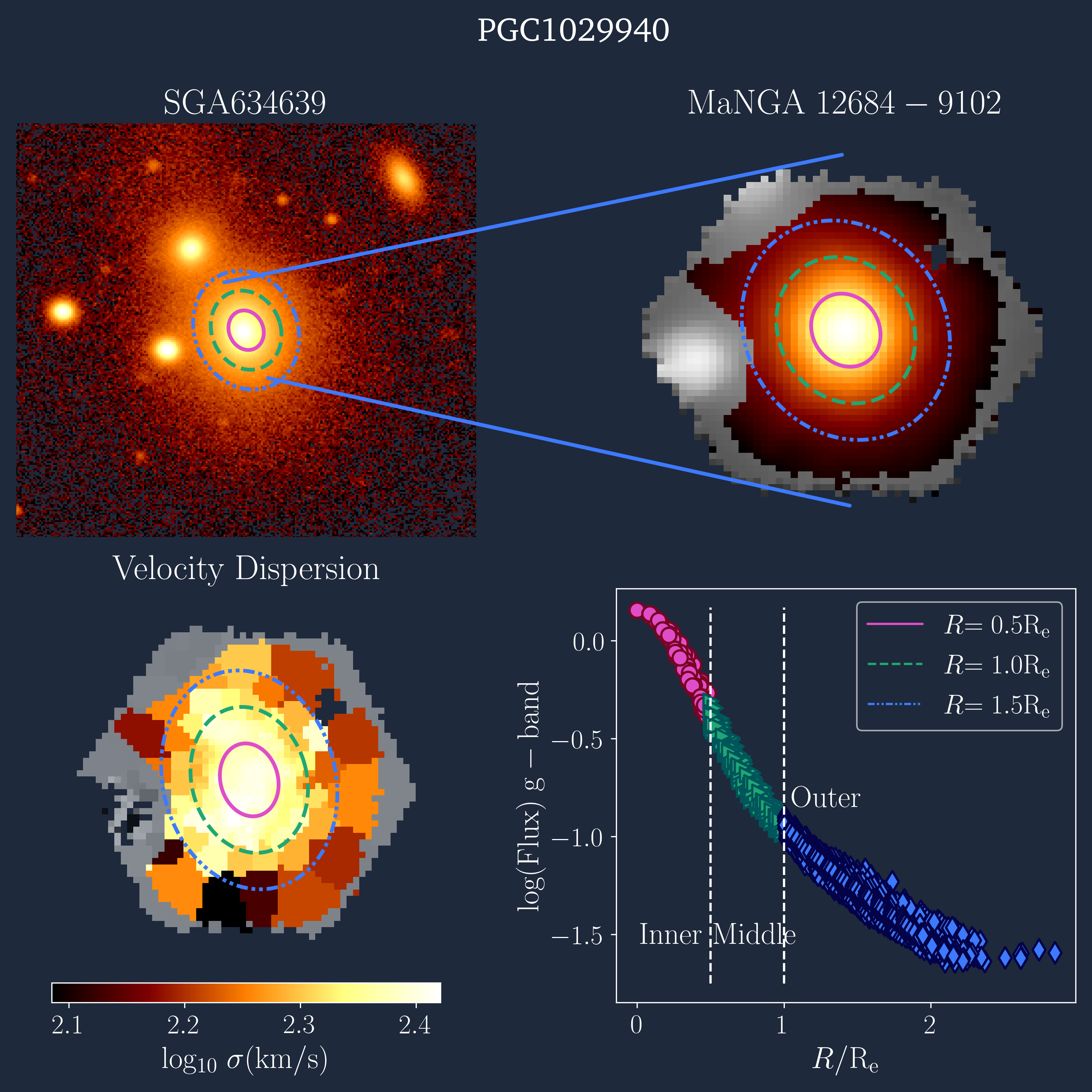
Plateifu: 12684-9102
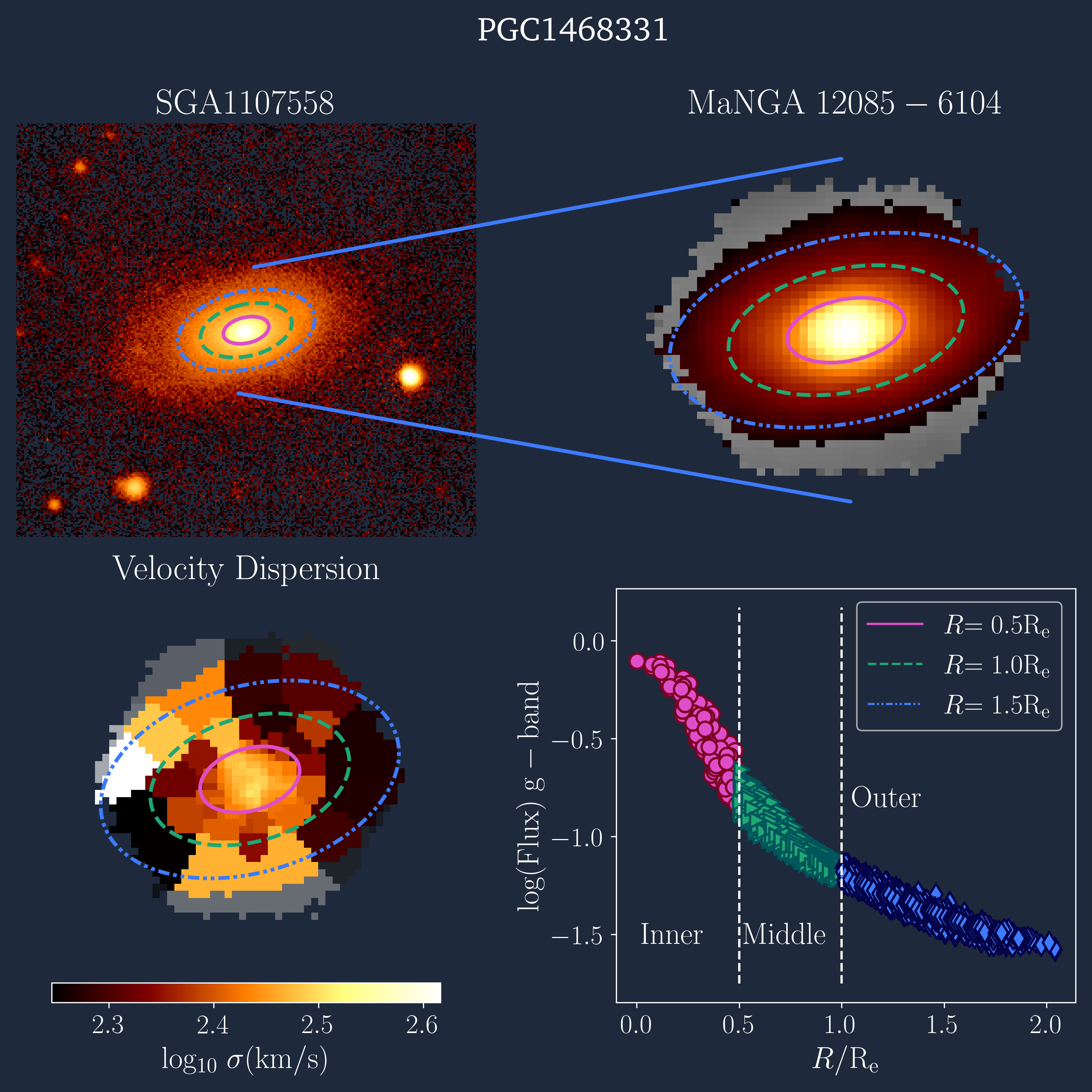
Plateifu: 12085-6104
Plateifu: 11749-6101
Plateifu: 10222-6104
Plateifu: 10216-9101
Plateifu: 8137-6101

Transferable skills

Why astronomy translates

Astronomy is one of the most data-intensive sciences in existence. A single observing run produces terabytes of raw pixels that must be cleaned, calibrated, modelled, and interpreted — often with no second chance to retake the data. The skills this demands map directly onto industry data roles: rigorous pipeline engineering, robust statistical inference, and clear communication of uncertain results under deadline pressure.

Get in touch
ASTRO →
Reduction pipelines → Production data engineeringBuilt end-to-end pipelines handling bias, flat-field, sky subtraction, and calibration across TB-scale datasets — directly analogous to production ETL and data quality workflows.
ASTRO →
Bayesian inference → Probabilistic modellingRoutinely applied MCMC, mixture models, and hierarchical Bayesian methods to noisy, heteroskedastic data — standard in astrophysics for 15 years, now increasingly valued in industry.
ASTRO →
Scientific visualization → Analytical storytelling & interactive dashboards Designed publication-grade visualizations and interactive Plotly dashboards to explore multi-dimensional datasets (N=726 galaxies), highlight population-level trends, and communicate statistical results clearly. Translated complex astrophysical parameters into intuitive visual narratives — directly transferable to KPI dashboards, exploratory data analysis, and stakeholder-facing reporting.